Are
you thinking of taking your TEFL course abroad? What are
the advantages of doing so? Many of our course participants
are aiming to go and teach in Spain after they qualify.
So maybe there is some logic in taking your CELTA, CertTESOL
or similar out there.
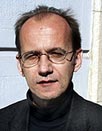
We interviewed Roger Hunt, world renowned teacher trainer
and ELT author who is currently working as Director of
Education at International House Barcelona to find out.
How would you say worldwide recognition of the CELTA
compares with that of the TESOL and other qualifications?
The Cambridge CELTA is certainly the best known of the
qualifications. Its assessment scheme, in which each course
is externally moderated by an assessor appointed by Cambridge
has ensured standardisation of grading of candidates;
consequently employers can be quite confident in the abilities
of new teachers they employ. The Cambridge scheme is also
rather bigger in terms of numbers of candidates than other
schemes.
Is the CELTA available on-line? Would you recommend
any of the distance learning courses in CELTA? If so,
which ones?
CELTA is not available on line. The assessment of practical
teaching under supervised conditions makes this impossible
at present.
Where do the CELTA trainees studying in Barcelona
come from?
About 35% come from the USA and Canada. A very few (although
this number is increasing) are non-native English speakers
from around the world. The majority are still from the
UK though my current course is 60% north American.
What are the main advantages of studying in Spain
as opposed to staying in the UK to do the course?
Working with monolingual groups. Most CELTA graduates
teach monolingual classes in their first jobs abroad.
The experience of encouraging English in a classroom where
it is not really needed can be very useful. Also, Barcelona
is quite a city!
To what extent does the quality of a CELTA vary from
centre to centre?
It shouldn't. This is because of the external assessment
scheme. However, clearly one tutor may be more gifted
than another, facilities in one centre better than another
etc. Cambridge ensures very high minimum standards by
constant moderation and standardisation of centres and
courses.
What are the main things to look out for when choosing
a CELTA?
It´s a good idea to see what else the centre offers
eg: help with finding work, other courses such as teaching
younger learners or the Cambridge DELTA (if your tutor
is also a DELTA tutor he/she is likely to be rather good!)
Is the 4-week intensive course really that tough?
A realistic number of hours involvement per day for candidates
is 12 to 15. Most candidates find the course tough (standards
are high) but most also thoroughly enjoy it. It has to
be noted that doing anything for the first time can be
difficult, and stressful.
Do trainees have time to learn some Spanish or meet
Spanish people during the course?
I would forget trying to learn a language during the
course - there is far too much else to do. However, candidates
do learn just by being here. They certainly meet lots
of Spanish people - they have to teach them!
What are the host families like? Are they close to
the school?
Host families are carefully selected and monitored by
the school. Most have been with IH for a very long time.
The norm is very helpful, friendly, caring people who
speak good English (particularly important for candidates
who do not speak Spanish). Most of the hosts are near
enough for candidates to walk to the school.
Do trainees who have taken the CELTA in Spain have
a better chance of finding work in Spain after the course?
I think so, yes. They can walk into schools and introduce
themselves. School directors usually prefer to meet a new
teacher if they can before employing them. You can tell
a certain amount from a CV but it´s not the same as
a face to face interview.